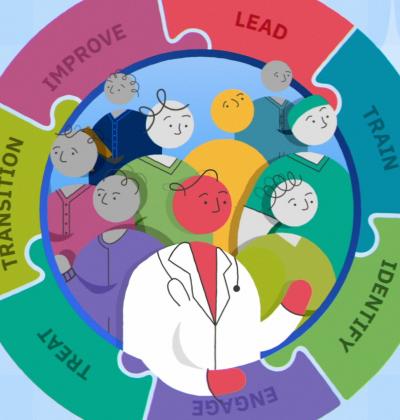
Join us to learn strategies for frontline workers to support safer suicide care in child welfare, schools, and family services through Zero Suicide implementation.
Supporting Youth and Families
Leading Zero Suicide from the Frontline: Supporting Youth and Families is a practical webinar designed for frontline professionals working in child welfare, schools, and family service settings. Grounded in the Zero Suicide framework, this webinar emphasizes safer suicide care as an ongoing, relational, and system-wide responsibility—not just a crisis response. Participants will explore how suicide risk is shaped by transitions, trauma, and system involvement, and how everyday interactions can become powerful opportunities for prevention.
Leading Zero Suicide from the Frontline Series
All staff have a role in preventing suicide, but frontline professionals—such as social workers, psychologists, nurses, peer support specialists, and supervisors—are uniquely positioned to drive meaningful Zero Suicide implementation. Their direct service experience provides critical insight into what works, what doesn’t, and where systems can improve.
Advancing Zero Suicide as a Frontline Provider is a free, three-part webinar series designed for health and behavioral health staff working in clinical, direct service, and leadership roles. The series explores evidence-informed strategies, practical tools, and real-world interventions to support frontline staff in implementing Zero Suicide and advocating for system-wide transformation toward safer suicide care.
Recordings of past webinars, along with recommended Zero Suicide resources, will be available at the links below.
Webinars
- Webinar 1: A Roadmap for Zero Suicide Champions—February 18th
- Webinar 2: Supporting Youth and Families—March 10th
- Webinar 3: The Power of Lived Experience—April 9th
Resources
- Zero Suicide Toolkit Resources
Zero Suicide Toolkit: The Zero Suicide model operationalizes the core components necessary for health care systems to transform suicide care into seven elements. The Toolkit uses research, tools, and videos to walk implementers through putting the Zero Suicide model into practice.
Zero Suicide Toolkit for Children’s Hospitals: This Toolkit adapts the Zero Suicide model for pediatric settings, offering evidence-based guidance, tools, and resources to help children’s hospitals implement the seven elements of Zero Suicide.
Resources for Children and Youth: This page curates evidence-based tools, trainings, and resources to support suicide prevention and safer care for children and youth across clinical and community settings.Getting Started with Zero Suicide: Wondering how to get started with Zero Suicide in your organization? This resource outlines 10 steps to getting started.
The Plan-Do-Study-Act (PDSA) Worksheet: A useful quality improvement tool for documenting a test of change.
Supporting Parents: The resource page on the Zero Suicide site offers a free, one-hour film and related resources to guide and support parents and caregivers after their child has attempted suicide by sharing lived experiences, expert insights, and practical information on what to expect and how to access care, plus tools for providers and community partners to share with families.
- Support from EDC's Zero Suicide Institute & Other Programs
Zero Suicide Institute offers training and consultation to support your Zero Suicide implementation. To further your implementation goals, we recommend:
Getting Further with Zero Suicide Consultation

Laurin Jozlin, senior project associate, is a licensed clinical social worker with 15 years of experience in suicide prevention, suicide intervention, community mental health, and child and adolescent mental health.