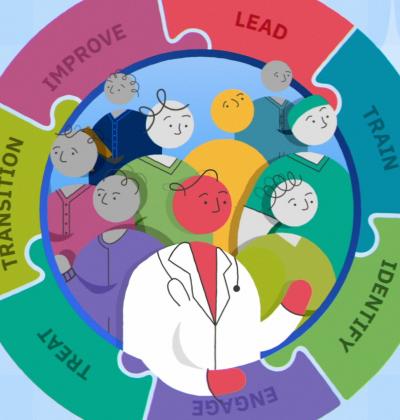
Join us for a panel discussion exploring how frontline staff with lived experience support and inform Zero Suicide implementation.
The Power of Lived Experience
Many frontline staff enter health and behavioral health care with personal experiences that drive their passion and commitment to help others. Nearly all will have professional experiences that shape their relationships with patients and clients, help them develop their skills, including suicide care interventions. Through stories shared by our panel of experts, this webinar aims to empower and encourage frontline staff to leverage their personal and professional experiences to take on a leadership role in Zero Suicide implementation, supporting system-wide change towards safer suicide care.
Leading Zero Suicide from the Frontline Series
All staff have a role in preventing suicide, but frontline professionals—such as social workers, psychologists, nurses, peer support specialists, and supervisors—are uniquely positioned to drive meaningful Zero Suicide implementation. Their direct service experience provides critical insight into what works, what doesn’t, and where systems can improve.
Advancing Zero Suicide as a Frontline Provider is a free, three-part webinar series designed for health and behavioral health staff working in clinical, direct service, and leadership roles. The series explores evidence-informed strategies, practical tools, and real-world interventions to support frontline staff in implementing Zero Suicide and advocating for system-wide transformation toward safer suicide care.
Recordings of past webinars, along with recommended Zero Suicide resources, will be available at the links below.
Webinars
- Webinar 1: A Roadmap for Zero Suicide Champions—February 18th
- Webinar 2: Supporting Youth and Families—March 10th
- Webinar 3: The Power of Lived Experience—April 9th
Resources
- Zero Suicide Toolkit Resources
Zero Suicide Toolkit: The Zero Suicide model operationalizes the core components necessary for health care systems to transform suicide care into seven elements. The Toolkit uses research, tools, and videos to walk implementers through putting the Zero Suicide model into practice.
Toolkit Adaptations: Zero Suicide is an adaptable model appropriate for a range of health and behavioral health settings and applicable across populations. Toolkit Adaptations are designed to complement the Zero Suicide Toolkit by filtering each element through a setting- and population-specific lens.
Suicide Care Insights: In Suicide Care Insights: Stories & Tips for Your Implementation, we've identified six topics related to workforce wellbeing and how safe suicide care can transform organizational culture. We present them here to you as a series of six resources using a mixed-media approach. Three of the resources are in the form of recorded stories. The other three are downloadable tips on how and what to implement to support and improve care for patients.
The Foundations of Lived Experience: Visit the Suicide Prevention Resource Center for suicide-centered lived experience stories, resources, and guidance.
- Support from Zero Suicide at EDC
Zero Suicide Institute offers training and consultation to support your Zero Suicide implementation. To further your implementation goals, we recommend:
Barb Gay is a highly experienced program leader and technical assistance provider who specializes in behavioral health and crisis care administration, suicide prevention system building, substance misuse prevention, social services, strategic planning, financial management, and staff development.

Shelby Kuhn delivers training and consultation to improve care and outcomes for individuals at risk for suicide using a continuous quality improvement framework.

Amy Molloy, senior project associate, is a behavioral health expert with 14 years of leadership experience in suicide prevention, mental health promotion, veterans’ services, and education.
Learn more